
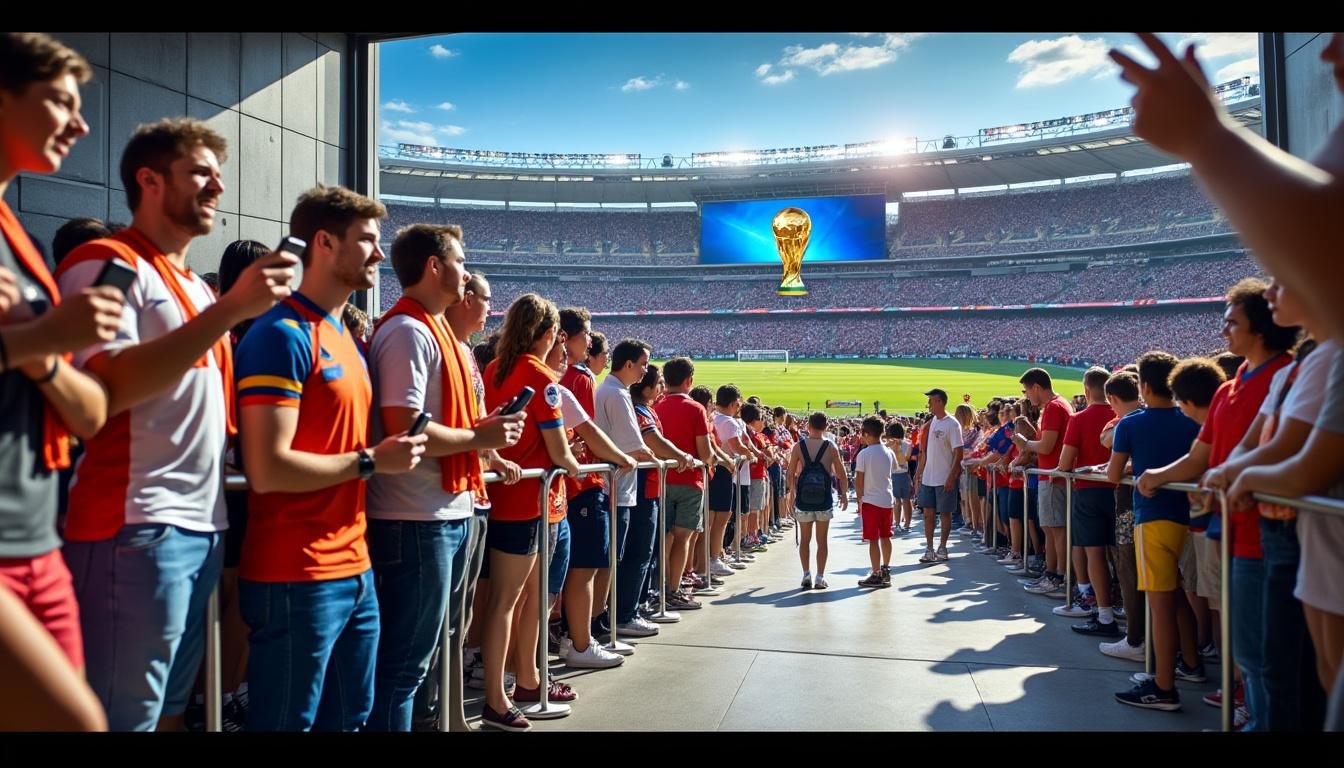

La Coupe du monde de football 2026 approche à grands pas, et les derniers billets sont désormais en vente pour cet événement sportif d’exception organisé conjointement par les États-Unis, le Canada et le Mexique. Avec un total de près de sept millions de billets disponibles pour les 104 matches, dont 78 se joueront sur le sol américain, les passionnés du monde entier cherchent à garantir leur place dans ce tournoi élargi qui réunit 48 équipes. Ce mercredi 1er avril, la FIFA a lancé la quatrième et dernière phase de vente, selon un principe implacable : premier arrivé, premier servi. Une opportunité en or à saisir sans attendre, d’autant que les tickets seront mis progressivement en ligne jusqu’au début des rencontres en juin.
Cette coupe du monde, très attendue, ne se limite pas au football. Elle s’accompagne de nombreuses aventures et découvertes aux visiteurs, notamment dans des régions comme la Riviera Maya au Mexique, une destination qui combine passion sportive et immersion culturelle dans des décors à couper le souffle. Avec des points de départ stratégiques comme Cancún, Playa del Carmen et Tulum, de multiples excursions s’adressent aux fans avides de rencontres culturelles, de nature et d’histoire au-delà des stades.
Les dernières ventes de billets s’annoncent délicates, marquées par une attente parfois longue devant le système de « file d’attente » virtuel mis en place par la FIFA, où chaque seconde compte. Les aficionados du football doivent donc s’armer de patience et de stratégie pour décrocher leur sésame, dans un climat où la demande bat tous les records. Ce guide vous accompagne pour ne rien manquer de l’ultime chance d’assister à la Coupe du monde de football 2026, et découvrir comment associer l’effervescence des matches à une expérience mexicaine inoubliable.
En bref :
- La dernière phase de vente de billets pour la Coupe du Monde 2026 est lancée : plus de 3 millions de tickets disponibles selon le principe « premier arrivé, premier servi ».
- Cette compétition se déroule aux États-Unis, au Canada et au Mexique, avec un programme dense de 104 matches entre juin et juillet.
- Le Mexique propose des escapades vers la Riviera Maya depuis Cancún, Playa del Carmen, et Tulum, pour combiner football et tourisme culturel.
- Le processus d’achat inclut une attente en ligne rigoureuse, avec un compte à rebours unique pour sécuriser les places.
- La FIFA s’attend à battre le record historique de billets vendus malgré des controverses sur les prix et la revente.
- Des liens officiels permettent d’en apprendre davantage sur les déplacements des matchs et les actualités des équipes.
Billetterie Coupe du Monde 2026 : saisir la dernière opportunité, premiers arrivés, premiers servis
La billetterie pour la Coupe du Monde 2026 est l’enjeu crucial de millions de fans de football qui veulent vivre l’émotion unique d’une compétition planétaire. Cette phase finale, ouverte depuis le 1er avril, concerne plus de trois millions de billets mis à disposition sur le site officiel. La mécanique repose sur un système de file d’attente virtuelle destiné à gérer l’afflux colossal de demandes.
Les acheteurs intéressés doivent s’inscrire sur le site officiel de la FIFA dès l’ouverture pour bénéficier de leur chance. Un compte à rebours s’enclenche, assurant une équité dans l’accès aux places. Une fois ce décompte arrêté, un bouton “Entrée” est disponible pendant cinq minutes afin d’accéder à la réservation. Ensuite, commence une véritable course contre la montre pour sélectionner les billets souhaités.
Cette discipline « premier arrivé, premier servi » met en lumière la nécessité d’une préparation optimale. Sachez que les billets peuvent s’écouler rapidement, en particulier pour les rencontres clés et les phases finales. La FIFA met en vente les places en continu jusqu’au lancement de la compétition, ce qui signifie qu’il n’est pas exclu de pouvoir obtenir un ticket même le jour d’un match, mais cela reste un pari risqué.
Cette dernière phase de vente est l’ultime chance avant la clôture définitive des achats. Alors que plus de trois millions de billets ont déjà trouvé preneur lors des étapes précédentes, cette dernière fournée offre encore un nombre important de sésames pour des rencontres dans les 16 stades dispersés à travers les trois nations.
La dynamique d’achat en direct et l’impatience des fans sont cependant accompagnées de critiques concernant les prix élevés et la gestion parfois opaque des billets. Un incident récent a mis en lumière des tensions autour des files d’attente et des limites imposées aux supporters. Pour se préparer au mieux, il est recommandé d’avoir un compte FIFA validé, une méthode de paiement prête et une connaissance précise des matchs désirés.
Explorer la Riviera Maya pendant la Coupe du Monde : idées d’excursions depuis Cancún, Playa del Carmen et Tulum
La Coupe du Monde au Mexique ne se limite pas aux stades. Pour ceux qui planifient un séjour prolongé, la Riviera Maya figure parmi les destinations les plus attractives du pays. Cette région côtière sur la mer des Caraïbes offre une palette d’activités variées, adaptées aux passionnés de culture, nature ou détente, avec trois points de départ incontournables : Cancún, Playa del Carmen et Tulum.
Excursions depuis Cancún
Cancún est un carrefour idéal pour partir à la découverte des merveilles mayas et écologiques. Parmi les incontournables figure la visite du site archéologique de Chichen Itza, classé au patrimoine mondial de l’UNESCO. Ce site emblématique témoigne de la grandeur de la civilisation maya. Pour une expérience complète, il est conseillé de prévoir une journée entière, souvent organisée en excursion d’environ 8 à 10 heures incluant le transport, la visite guidée et une pause pour se rafraîchir dans un cénote naturel.
Outre les ruines, Cancún propose des activités aquatiques, telles que la plongée sous-marine dans la barrière de corail, la deuxième plus grande au monde. Les amateurs de sensations fortes pourront aussi explorer la jungle en tyrolienne ou pratiquer le snorkeling autour de l’île de Cozumel, accessible en ferry.
Sorties culturelles et balades en Playa del Carmen
Playa del Carmen, avec son ambiance plus décontractée, offre une variété d’excursions proches des plages et réserves naturelles. L’exploration des cénotes (puits naturels d’eau douce) est un must pour se rafraîchir et découvrir un écosystème unique. La réserve naturelle de Sian Ka’an, classée patrimoine mondial, permet d’entrer dans un univers d’une incroyable biodiversité, parfait pour les adeptes d’observation faunique et de navigation en kayak.
La ville elle-même séduit par sa Quinta Avenida, une rue commerçante animée, idéale pour goûter aux spécialités culinaires mexicaines ou ramener des souvenirs. Visiter Playa del Carmen après un match peut offrir un contraste stimulant, entre l’euphorie sportive et la tranquillité tropicale.
Tulum : histoire antique et plages paradisiaques
Tulum attire pour son mariage unique entre vestiges archéologiques et plages immaculées. Le site archéologique de Tulum, perché sur une falaise dominant la mer, permet une immersion dans un décor spectaculaire où histoire et mer des Caraïbes fusionnent. Visiter le matin, avant la chaleur, est recommandé, suivi d’une baignade sur les plages environnantes.
Pour prolonger le séjour à Tulum, les fans peuvent profiter de spas, cours de yoga en plein air et restaurants bio, faisant de cette escale un havre de paix après l’intensité des rencontres. Les possibilités d’excursions en VTT ou quad dans la jungle sont aussi très prisées.
Organisation pratique pour les fans : conseils pour optimiser l’expérience Coupe du Monde au Mexique
Les supporters qui choisissent le Mexique comme base pour suivre la Coupe du monde doivent bien s’organiser pour profiter pleinement de l’événement, en alternant football et tourisme. La logistique, les transports, et les réservations sont à anticiper à l’avance. Voici des recommandations concrètes pour maximiser le plaisir tout en évitant les pièges courants.
- Réservation anticipée des billets et hébergements : Avec la billetterie en mode « premier arrivé, premier servi », il est crucial de sécuriser les dépla-cements et les nuitées rapidement. Les zones de Cancún, Playa del Carmen et Tulum offrent un large éventail d’hôtels, d’auberges et d’appartements, mais la demande grimpe fortement durant la période du tournoi.
- Transport entre lieux de matches et sites d’excursions : Le réseau routier au Mexique permet de rejoindre facilement la Riviera Maya et les stades proches, cependant le trafic peut être dense aux heures de grande affluence. Il convient d’opter pour des excursions avec des départs tôt le matin pour anticiper les embouteillages.
- Attention aux protocoles sanitaires et règles locales : Les autorités locales maintiennent des mesures de sécurité strictes autour des stades et sites touristiques. Se tenir informé des consignes officielles est essentiel pour éviter toute déconvenue.
- Combiner détente et énergie sportive : Après une journée intense de matches, prévoir des moments de récupération dans des cadres naturels ou grâce aux services d’hébergements spécialisés, contribue à une expérience équilibrée.
- S’informer régulièrement via des sources officielles : Les mises à jour concernant la billetterie, les retransmissions et l’organisation des matches évoluent fréquemment. Des portails comme football2026mexico.com sont des ressources fiables à consulter.
Ces stratégies permettent de jongler avec les exigences d’une compétition majeure tout en découvrant la richesse culturelle et naturelle mexicaine, faisant de la Coupe du Monde une aventure bien plus large qu’un simple tournoi.
Un panorama des stades et matches clés de la Coupe du Monde : comprendre l’enjeu de la billetterie
La Coupe du Monde 2026 verra 16 stades répartis dans 16 villes d’Amérique du Nord accueillir les matchs. L’ampleur du tournoi, avec ses 48 sélections, décuple l’enjeu autour des billets. Il est essentiel pour les supporters de savoir quels sont les lieux emblématiques et les matches phares afin d’orienter leur choix d’achat.
| Stade | Ville | Capacité | Nombre de matches | Particularité |
|---|---|---|---|---|
| Rose Bowl | Pasadena | 92,000 | 7 | Matchs du KO et finale potentielle |
| Estadio Azteca | Mexico City | 87,000 | 6 | Stade historique, déjà hôte de finales |
| BC Place | Vancouver | 54,500 | 4 | Stade canadien principal |
| MetLife Stadium | East Rutherford | 82,500 | 6 | Grand stade près de New York |
| Gillette Stadium | Foxborough | 65,000 | 4 | Proximité de Boston |
Le stade Azteca à Mexico propose une atmosphère unique, mêlant passion locale et héritage historique, notamment pour les fans qui souhaitent vivre un match au cœur de la culture mexicaine. Les rencontres se répartissent entre matchs de groupes et phases finales, offrant différentes expériences selon le programme choisi.
Pour celles et ceux qui recherchent des ambiances électriques et la présence de fêtes géantes dans les tribunes, le Rose Bowl et le MetLife Stadium sont des incontournables du dispositif américain, avec des capacités géantes et des accès facilités.
Choisir les matches reste une étape stratégique fondamentale, car certains billets disparaissent en un éclair. Les passionnés doivent donc s’appuyer sur des méthodes rapides et fiables pour réussir leur achat.
Explorer l’impact économique et social de la Coupe du Monde au Mexique et en Amérique du Nord
Au-delà du spectacle sportif, la Coupe du Monde 2026 représente un moteur économique et social majeur pour les pays hôtes. En particulier, le Mexique voit en cet événement une opportunité de développement touristique et culturel, en faisant rayonner ses atouts tout en stimulant ses infrastructures.
Cette compétition mobilise une vaste chaîne de fournisseurs, petits commerçants, hôtels, guides touristiques et artisans locaux. Le tourisme lié aux matches, mais aussi aux excursions vers des sites remarquables comme Chichen Itza, génère une activité qui dépasse largement celle d’un événement sportif traditionnel.
Sur le plan social, la Coupe du Monde au Mexique rassemble différentes communautés, nourrit le dialogue interculturel, et valorise la jeunesse grâce aux programmes éducatifs et sportifs qui accompagnent l’événement. Cependant, ce succès économique est également synonyme de défis : gestion des flux massifs de visiteurs, sécurité renforcée, préservation de l’environnement et lutte contre les prix excessifs des billets et services annexes.
La collaboration entre les trois pays hôtes et la FIFA reflète une volonté commune d’offrir une expérience unique, mais aussi d’encourager un tourisme durable et responsable. La mise en valeur du patrimoine local dans des régions comme la Riviera Maya, avec ses richesses archéologiques et naturelles, prouve que l’événement dépasse largement la dimension strictement sportive.
| Impacts économiques | Impacts sociaux |
|---|---|
| Création d’emplois temporaires (hôtellerie, restauration, transport) | Renforcement du vivre-ensemble entre communautés locales et visiteurs |
| Augmentation significative du chiffre d’affaires touristique | Valorisation de la culture locale et de la jeunesse par les activités sportives |
| Modernisation des infrastructures et des transports publics | Meilleure visibilité et attractivité internationale |
| Défis liés à la gestion des flux touristiques massifs | Pressions sur les ressources locales et environnementales |
L’expérience de la Coupe du Monde va donc au-delà du simple plaisir d’assister à une rencontre, offrant aux fans une occasion d’enrichissement personnel et culturel. Se préparer à cette aventure, c’est aussi s’ouvrir à des rencontres et paysages inédits.
Comment acheter un billet lors de la dernière phase de la billetterie ?
Les billets sont vendus sur le site officiel de la FIFA selon le principe premier arrivé, premier servi, avec une file d’attente virtuelle et un compte à rebours avant l’accès à la vente.
Quelles sont les destinations recommandées au Mexique pendant la Coupe du Monde ?
Cancún, Playa del Carmen et Tulum offrent des excursions vers la Riviera Maya, incluant visites de sites mayas, plages et activités nature pour découvrir la région après les matches.
Quels sont les stades les plus emblématiques de la Coupe du Monde 2026 ?
Le stade Azteca à Mexico, le Rose Bowl à Pasadena, et le MetLife Stadium à East Rutherford sont parmi les stades majeurs accueillant des matches clés du tournoi.
Existe-t-il des différences dans la revente des billets selon les pays organisateurs ?
Oui, au Mexique, la revente à prix supérieur est interdite, contrairement aux États-Unis et au Canada où le marché secondaire n’est pas régulé par la FIFA.
Comment suivre les actualités et changements liés à la Coupe du Monde ?
Des sites spécialisés comme football2026mexico.com proposent des informations actualisées sur les matchs, les déplacements de rencontres et la billetterie.