

La qualification historique de la République démocratique du Congo (RD Congo) pour la Coupe du Monde 2026 a déclenché une vague d’émotions et de célébrations dans tout le pays. Après 52 ans d’absence, les Léopards ont su se hisser au sommet grâce à une performance pleine de ténacité et de courage. Grâce à une victoire décisive face à la Jamaïque, obtenue au prix d’un suspense insoutenable, la nation congolaise retrouve la ferveur du football mondial. Cette réussite n’est pas seulement sportive, elle incarne un symbole d’espoir et de fierté pour la population congolaise, passionnée et mobilisée derrière son équipe nationale.
Dans un contexte où chaque but et chaque arrêt se sont joués dans l’intensité, le parcours des Léopards illustre à la fois la résilience et le talent africain sur la scène internationale. Les supporters se sont massés dans les rues de Kinshasa et d’autres villes pour partager leur joie débordante, offrant des scènes de liesse mémorables. Cette qualification ouvre une nouvelle page dans l’histoire du football africain et promet d’alimenter l’engouement autour de la Coupe du Monde, un événement qui, en 2026, s’annonce riche en émotions et en diversité culturelle.
En bref :
- RDC qualifiée pour la première fois depuis 1974, marquant un tournant historique.
- Victoire clé contre la Jamaïque, un match au suspense marqué par des moments intenses et des arrêts décisifs du gardien.
- Une qualification qui met fin à une longue période d’attente et d’efforts, portée par la passion des supporters.
- Des scènes de fête et de mobilisation populaire remarquables à travers tout le pays.
- Un témoignage éclatant de la montée en puissance de l’équipe nationale congolaise sur la scène mondiale.
Une qualification au bout du suspense : le triomphe des Léopards face à la Jamaïque
La rencontre décisive opposant la RD Congo à la Jamaïque restera gravée dans les mémoires comme l’une des plus palpitantes de cette phase qualificative. Les Léopards ont su faire preuve d’une maîtrise tactique exemplaire, combinée à une force mentale remarquable pour arracher une victoire 1-0 après prolongation. Ce but unique est l’aboutissement d’une bataille acharnée, où chaque seconde comptait. Le gardien congolais s’est particulièrement illustré en repoussant trois tentatives majeures, sauvant ainsi son équipe et ses chances de qualification.
Au-delà de la performance individuelle, ce succès est le fruit d’un collectif solide, qui a su s’adapter et surmonter les défis d’un match sous haute tension. La RD Congo n’a pas seulement cherché à gagner, elle a construit sa victoire à partir de la détermination et de la cohésion, des valeurs fondamentales qui résonnent dans tout le pays. Ce succès marque une étape décisive au sein des barrages tant attendus, où chaque équipe rivalisait d’intensité pour décrocher un ticket pour le prestigieux Mondial.
Le contexte historique renforce l’importance de ce triomphe. Depuis 1974, date de sa dernière participation sous la bannière du Zaïre, la RD Congo n’avait plus foulé l’herbe d’une Coupe du Monde. Ce long hiatus, jalonné par de nombreux obstacles et défaites amères, ajoute une couche émotionnelle à cette qualification. Cette victoire face à la Jamaïque, relayée par France 24, incarne le renouveau du football congolais, prêt à s’imposer parmi les grands.
Les scènes de fête et l’émotion populaire après la qualification historique
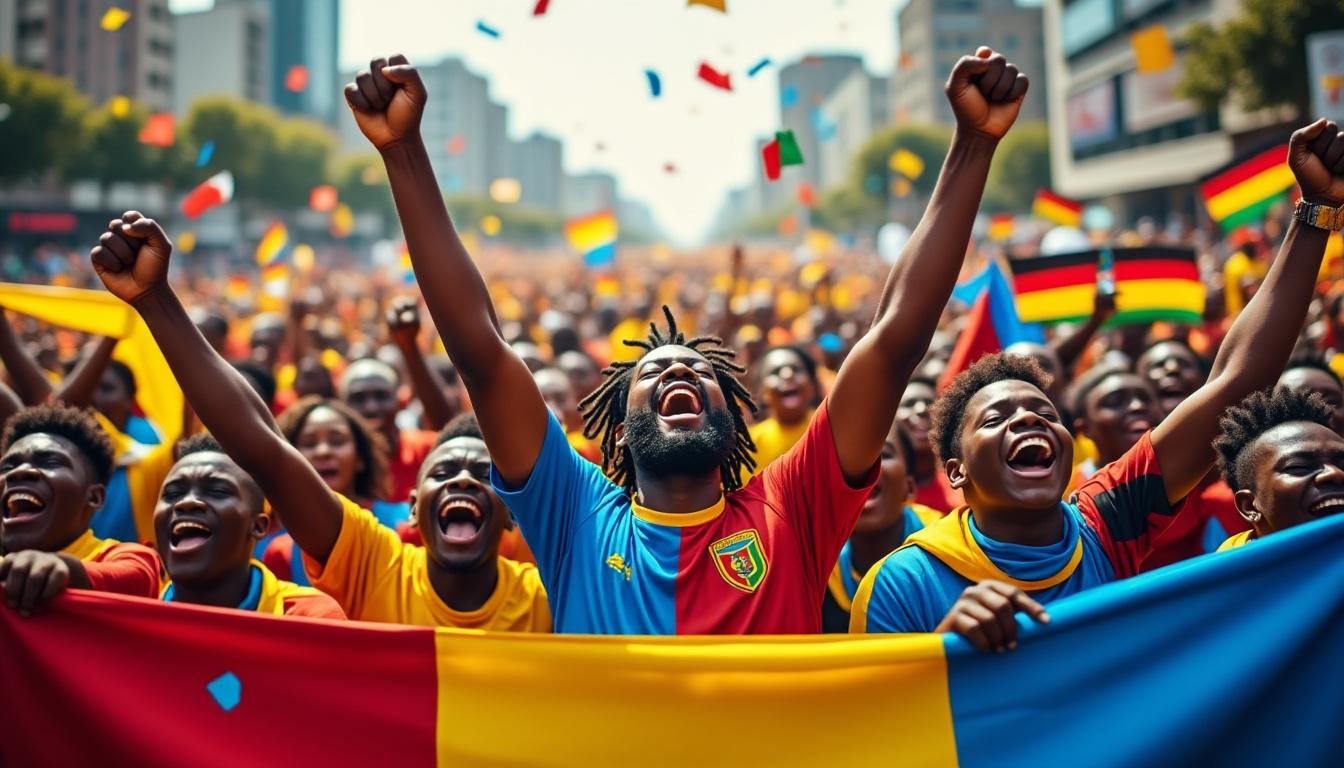
Le coup de sifflet final a déclenché une explosion de joie au cœur de la RD Congo. Dans les rues de Kinshasa, Lubumbashi et d’autres villes, des milliers de supporters ont envahi l’espace public pour exprimer leur bonheur. Les scènes de liesse se sont étirées toute la nuit, accompagnées de chants, de danses traditionnelles et d’embrasements de drapeaux. Cette qualification, célébrée comme un exploit pour le football africain, a ravivé une passion collective longtemps bridée.
Les images de rassemblements spontanés témoignent de l’attachement profond que les Congolais portent à leur équipe nationale. Pour beaucoup, ce succès dépasse le simple cadre sportif : il incarne la persévérance face aux difficultés économiques et sociales. En témoignent les témoignages émouvants relayés par MSN Actualités, où l’on ressent toute la ferveur d’une nation unie derrière ses Léopards.
Chaque quartier, chaque foyer s’est transformé en un lieu de célébration où la fierté s’est manifestée en couleurs, sons et danses. Cette ferveur n’a pas épargné les plus jeunes, nombreux à embrasser le football comme un rêve d’avenir, un pont vers une reconnaissance mondiale. Ce regain d’enthousiasme ouvre de nouvelles perspectives pour le développement et la promotion du football en RD Congo.
Un coup d’accélérateur pour le football africain et une inspiration pour la jeunesse congolaise
La qualification des Léopards pour la Coupe du Monde 2026 ne se limite pas à un triomphe national, elle intervient également dans un contexte plus large de croissance du football africain. Alors que le continent décroche des succès répétés dans les compétitions internationales, la RD Congo vient enrichir ce dynamisme par son histoire et son potentiel renouvelé.
La profondeur du réservoir de talents congolais est mise en lumière à mesure que l’équipe affrontera des adversaires de renom sur la scène mondiale. Cette reconnaissance internationale promet d’accroître la visibilité des joueurs locaux et d’attirer des investissements stratégiques dans les infrastructures sportives. De quoi dynamiser l’économie sportive et donner du souffle à la relève.
Pour la jeunesse congolaise, la qualification des Léopards est une source de motivation puissante. Les jeunes joueurs s’identifient à leur équipe nationale, nourrissant l’espoir de rejoindre un jour cette élite qui porte haut les couleurs du pays. Ce phénomène dépasse le cadre du sport, favorisant un sentiment d’appartenance et d’ambition collective. La RD Congo se redessine ainsi comme un foyer de talents et d’opportunités.
Le chemin du succès : analyse des étapes clés menant à la qualification de la RD Congo
La route vers la Coupe du Monde 2026 aura été semée d’embûches, mais les Léopards ont su franchir toutes les étapes avec un courage remarquable. Le parcours a notamment inclus une victoire dramatique en barrages africains contre le Nigeria, remportée aux tirs au but (4-3) après un match tendu qui s’est conclu sur un score de 1-1 après prolongations. Ce match à Rabat reflète parfaitement la combativité et la résilience de l’équipe.
Chaque rencontre des barrages a exigé une concentration extrême, où la capacité à gérer le stress et à saisir les opportunités a fait la différence. Le tableau ci-dessous récapitule les moments forts et les scores clés qui ont permis à la RD Congo de décrocher ce billet tant convoité.
| Phase | Adversaire | Score | Lieu | Date |
|---|---|---|---|---|
| Quart de finale barrages CAF | Nigeria | 1-1 (4-3 TAB) | Rabat | 17 novembre 2025 |
| Finale barrages intercontinentaux | Jamaïque | 1-0 après prolongation | Kinshasa | 31 mars 2026 |
À chaque étape, la RD Congo a montré un esprit d’équipe exemplaire et un sens stratégique affûté, crucial face à la pression des échéances. Ce parcours héroïque, relayé notamment par Deutsche Welle, illustre un engagement sans faille et un avenir prometteur.
Conseils pratiques pour les visiteurs de la Coupe du Monde 2026 au Mexique et excursions vers la Riviera Maya
Alors que le monde se tourne vers la Coupe du Monde 2026 au Mexique, les visiteurs auront une occasion unique d’allier passion du football et découverte culturelle. Pour ceux qui feront le déplacement, des excursions au départ de Cancún, Playa del Carmen ou Tulum offrent un cocktail parfait entre détente, nature et aventure. Chacune de ces bases propose des expériences riches et variées, adaptées à tous les types de voyageurs.
Depuis Cancún, une excursion de 8 heures vers les célèbres ruines mayas de Chichén Itzá est incontournable. Ce site classé au patrimoine mondial de l’UNESCO fascine par son histoire et sa grandeur architecturale. Les visiteurs peuvent également profiter des plages paradisiaques de la région, combinant sport et détente.
Playa del Carmen, plus intime, offre des activités telles que la plongée sous-marine dans la réserve de Cozumel ou la visite des cénotes, ces puits naturels d’eau douce. Les sorties peuvent être organisées sur une demi-journée à une journée complète, permettant ainsi de maximiser le temps en fonction du programme footballistique.
Tulum se distingue par son ambiance bohème et ses plages sauvages. Les excursions depuis Tulum peuvent inclure des visites de la réserve de Sian Ka’an, un havre de biodiversité, ou des balades en kayak dans les mangroves. Ces activités sont parfaites pour les amateurs de nature et de culture, offrant un contraste agréable avec l’effervescence des matchs.
Voici un aperçu des meilleures excursions depuis ces trois villes mexicaines pour profiter pleinement de l’expérience touristique pendant la Coupe du Monde :
- Cancún : Ruines de Chichén Itzá, plages de sable blanc, snorkeling
- Playa del Carmen : Plongée à Cozumel, exploration des cénotes, shopping local
- Tulum : Réserve de Sian Ka’an, kayak dans les mangroves, sites archéologiques préservés
En planifiant soigneusement les journées, les supporters peuvent facilement conjuguer enthousiasme sportif et escapades mémorables. Il est recommandé de réserver les excursions en avance et de s’adapter aux horaires des matchs pour ne rien manquer de cet événement mondial.
Comment la RD Congo a-t-elle réussi à se qualifier après une si longue absence ?
La RD Congo a fait preuve d’un collectif solide et d’une détermination sans faille, notamment grâce à des performances clés lors des barrages contre le Nigeria puis la Jamaïque, où la stratégie défensive et les arrêts décisifs du gardien ont été déterminants.
Quels ont été les moments les plus marquants de cette qualification ?
Les matchs serrés face au Nigeria, remportés aux tirs au but, et la victoire 1-0 contre la Jamaïque après prolongation sont les moments déterminants. Ces rencontres ont été chargées d’intensité et de suspense, captivant les supporters.
Quelles activités peut-on faire dans la région de la Riviera Maya pendant la Coupe du Monde ?
Du nord au sud, Cancún, Playa del Carmen et Tulum offrent des excursions vers des sites historiques et naturels comme Chichén Itzá, les cénotes, la réserve de Sian Ka’an, ainsi que des activités de plongée, kayak et plages.
Quel est l’impact de cette qualification pour le football africain ?
Cette qualification, après plus de cinquante ans d’absence, symbolise la montée en puissance du football africain sur la scène mondiale et inspire toute une nouvelle génération de joueurs à travers le continent.